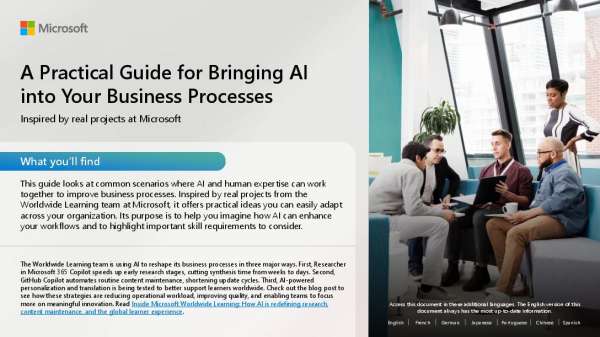
AI can help you reshape localization into a faster, more scalable process, with your regional experts providing the final judgment.
According to the guide, marketing teams use Microsoft 365 Copilot and Researcher to support translation and personalization in these ways:
- Initial localized drafts: Copilot produces first-pass localized versions of campaign assets, adapting language, examples, and tone for specific regions.
- Cultural and brand adaptation: Copilot assists with phrasing and formatting based on campaign information, while human reviewers ensure cultural fit and brand alignment.
- Quality checks across versions: Researcher flags inconsistencies, translation gaps, or tone mismatches across localized assets.
- Organizing and distributing assets: Copilot prepares files in multiple formats, ensures metadata consistency, and organizes versions for export. Researcher tags and categorizes content by market, audience, or asset type.
The human workflow remains central:
- Marketing managers create the original campaign content and collaborate with regional leads on localization.
- Regional or local leads validate accuracy, tone, and brand fit, and approve channels and formats for deployment.
- Field and campaign teams use the localized assets across social, digital, and in-market activities.
To make AI-supported localization effective, the guide highlights several skill areas:
- Prompting for cultural nuance: Comfort with prompting AI tools to produce culturally and brand-appropriate localized content.
- Regional expertise: Familiarity with international marketing norms, sensitivities, and regulatory constraints.
- Knowledge sharing: Identifying employees with strong cultural insights and finding ways to scale or share that expertise.
- Clear review boundaries: Defining which elements of localization require regional review and what support employees need to own that work.
Recommended training in the guide includes topics like “Compose and summarize documents with Microsoft 365 Copilot in Word” and “Top skills for leaders in the AI era”, which can help teams build the mix of AI fluency and cultural judgment needed for global campaigns.





 Sign in with LinkedIn